
Endometriosis: an average of 7 years until the diagnosis
Dutch research shows that it takes a median of more than 7 years before the diagnosis of endometriosis is made, sometimes as long as 30 years. Not because the condition is rare: an estimated 400,000 to 500,000 women in the Netherlands have it. The delay is spread across the patient, GP and gynecologist, and often starts with the sentence: that's part of it.
Endometriosis is a condition in which tissue that resembles endometrium grows outside the uterus, for example on the ovaries, fallopian tubes or peritoneum. Just like the uterine lining, this tissue responds to the hormone cycle, which can cause inflammation, adhesions and severe pain.
The problem is not that endometriosis is unknown to medical science. The problem is that severe menstrual pain is still seen as something that is part of being a woman. Research among GPs confirms that they underestimate both the occurrence and the degree of delay.
This page does not provide medical advice. We show the pattern that repeats itself: pain that is dismissed as normal, a long journey through the GP and gynecologist, and a diagnosis that is often only confirmed through keyhole surgery. For diagnosis and treatment, go to your GP or gynecologist.
What this does to your life
Endometriosis not only affects pain, but also work, relationships and sometimes the desire to have children. Not being able to function for a number of days every month is devastating, especially if those around you dismiss it as 'just having your period'. The invisibility of the condition, in combination with the fact that it sometimes takes years before a name is given to the symptoms, is at least as difficult for many women as the pain itself.
Three phases, each with its own delay
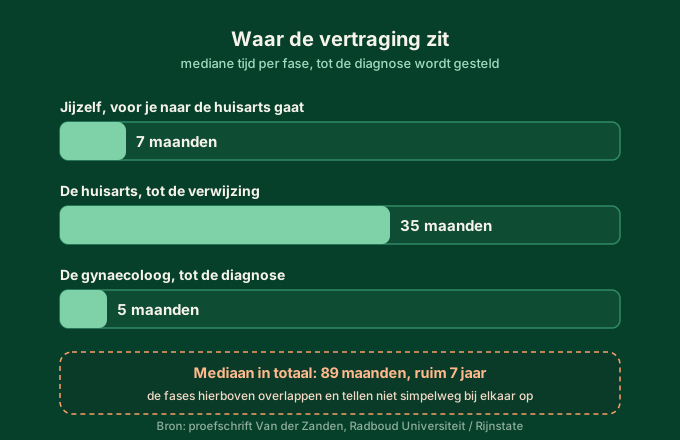
The delay in endometriosis is not linked to one link. The patient herself waits a median of 7 months before going to the GP, the GP needs a median of 35 months to refer, and the gynecologist then needs a median of 5 months for the diagnosis.
This means that a solution in one place is not sufficient. Awareness among the patient, knowledge at the GP, and faster diagnosis by the gynecologist all need to improve at the same time.
What you can expect from treatment
A more detailed overview of the complete treatment route can be found on the treatment page.
Pain relief and hormonal therapy first
The pill, a hormone IUD or other hormone therapy to suppress the menstrual cycle and thus the symptoms.
Laparoscopy: diagnosis and treatment all of a sudden
Keyhole surgery can confirm endometriosis and at the same time remove or burn away tissue.
If you want to have children, a separate consideration
The choice between surgery and, for example, IVF depends on the individual situation and is made together with the gynecologist.
What you can look out for
A complete overview of recognition points is on the recognition page.
Severe menstrual pain
Pain that does not respond to regular painkillers and hinders your daily functioning.
Pain outside your period
Including pain during sex, urination or defecation, especially around menstruation.
Fertility problems
Endometriosis is one of the known causes of an unfulfilled desire to have children, although not everyone suffers from this.
Why ZORGFUIBRRAND collects this
One story about years of misunderstood menstrual pain is quickly dismissed as bad luck. Thousands of stories together show that the delay is not with one link, but with the patient, GP and gynecologist at the same time, and that there is therefore room for improvement in several places at the same time.
We do not ask for your medical file. We ask for your experience: how often were you told that it was 'part of the equation', and how many years did it ultimately take before the pain was given a name.
“A quarter of twelve-year-old girls already have so much pain that they cannot go to school. We still call that normal.”
Frequently asked questions
What exactly is endometriosis?
How long does it take on average before the diagnosis is made?
How many women have endometriosis?
How is endometriosis diagnosed?
What treatments are available?
What Zorgfuik does and does not do?
🏎 Need immediate help?
In case of immediate danger to yourself or someone else: call 112. Are you in distress or are you thinking about suicide? You can call or chat with 113 Suicide Prevention day and night via 0800-0113. Zorgfuik is not a crisis service and cannot solve acute requests for help, but we think it is important that you know where you can go.