
Migraine: not 'just a headache'
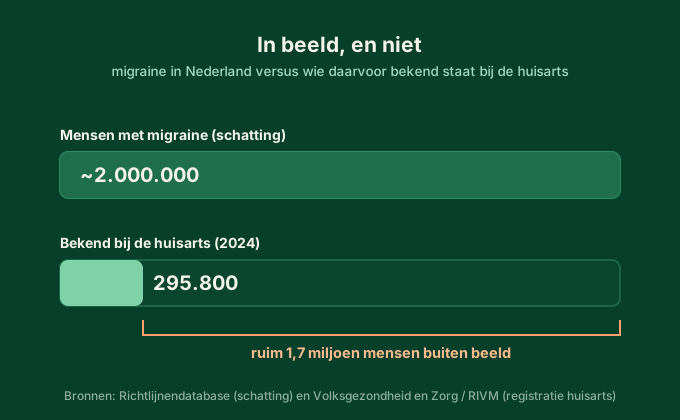
It is estimated that 2 million people in the Netherlands regularly suffer from migraines. Less than 300,000 of these are registered with the GP. The rest look for it themselves, take painkillers themselves, and some of them slip into a new trap: medication overuse headache, caused by exactly the drugs that were supposed to relieve the pain.
Migraine is not an ordinary headache. It is an inherited brain disorder with attacks that can last hours to days, often with nausea, hypersensitivity to light and sound, and sometimes an aura: temporary visual or sensory disturbances just before the pain begins.
The problem is not that registration is lacking at a single counter. The problem is the gap between those who have migraines and those who are identified for them: approximately 2 million people compared to less than 300,000 registered with the GP. Over time, some of those who are in the picture become more concerned with combating the headache than with controlling the migraine itself.
This page does not provide medical advice. We show the pattern that often repeats itself: the condition is not taken seriously as 'just a headache', people start combining and increasing painkillers themselves, and it is precisely that overuse that can cause a new, independent headache disorder. For the diagnosis and treatment of migraine, you always go to your GP or neurologist.
What this does to your life
Migraine costs work, social moments and energy that you cannot get back. Birthdays, meetings and birthday parties are canceled the moment an attack strikes, often without much warning. For those who have several attacks per month, the effect on work and relationships is real and it is often underestimated by those around them, precisely because there is nothing to see between the attacks.
The gap between who has it and who is in the picture
About 2 million people in the Netherlands regularly have migraines. Less than 300,000 of these are registered with the GP. That is not a rounding difference, that is a gap of more than 1.7 million people.
That gap does not mean that all those people are not affected. It means that they manage themselves with over-the-counter painkillers, exactly the route that can eventually lead to medication overuse headaches.
What you can expect from treatment
A more detailed overview of the complete treatment route can be found on the treatment page.
Assault medication, on time
Paracetamol or an NSAID for mild attacks, a triptan for more severe attacks. The earlier in the attack, the better it works.
Preventive medication for more than 2 attacks per month
Beta blockers, topiramate or newer CGRP inhibitors can structurally reduce the number of attacks.
Always keep an eye on overuse
More than 10 to 15 days pain medication per month is a signal, not a long-term solution.
What you can look out for
A complete overview of recognition points is on the recognition page.
Throbbing, one-sided pain
Often on one side of the head, worsens with exertion, lasts 4 to 72 hours untreated.
A phase before the pain
Fatigue, yawning, cravings for sweets or mood swings, hours to a day beforehand.
Sometimes an aura
About 1 in 3 people with migraine experience flashes, zigzag lines or tingling just before the headache.
Why ZORGFUIBRRAND collects this
One story about a missed migraine diagnosis is a personal inconvenience. Thousands of stories together show that 'just a headache' conceals a condition that can be easily treated, provided it is recognised in time and not treated with more and more painkillers.
We do not ask for your medical file. We ask for your experience: how long did it take before someone said the word migraine, and what did you do in the meantime to control the pain.
“Two million people with migraine, and GP care only knows a fraction of them.”
Frequently asked questions
What is the difference between migraine and normal headache?
What is medication overuse headache (MOH)?
How many people have migraines in the Netherlands?
What is an aura in migraine?
What treatments are available for migraine?
What Zorgfuik does and does not do?
🏎 Need immediate help?
In case of immediate danger to yourself or someone else: call 112. Are you in distress or are you thinking about suicide? You can call or chat with 113 Suicide Prevention day and night via 0800-0113. Zorgfuik is not a crisis service and cannot solve acute requests for help, but we think it is important that you know where you can go.