
Autism in women: missed three times as often as in men
The ratio of autism diagnoses between men and women in the Netherlands is still around 3 to 1, while research indicates that autism is probably not more common in men. Girls are diagnosed on average 2 to 3 years later than boys, and almost half of the women who later turn out to have autism initially received at least one other diagnosis that was subsequently withdrawn.
Autism in women often manifests itself differently from the picture on which most diagnostic instruments are based. Women camouflage their characteristics more often and better: they imitate social behavior, force eye contact and mirror others, which conceals autism for a long time from the outside world and sometimes from themselves.
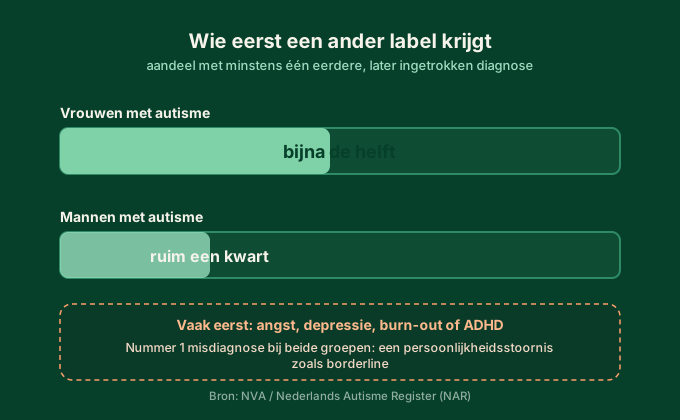
The problem is not that autism is rarer in women. The problem is that common diagnostic questionnaires have traditionally been based on boys and men, and camouflage hides exactly the signals those questionnaires look for. Research by the Dutch Autism Register shows that almost half of women first received another diagnosis, such as an anxiety disorder, depression or a personality disorder, compared to more than a quarter of men.
This page does not provide medical advice. We show the pattern that repeats itself: camouflage that causes exhaustion, misdiagnoses that are made first, and recognition that still lags behind that of men. Autism is also regularly missed in men and in children and teenagers, only through a different pattern: see our own files on autism in men and autism in children and teenagers. For diagnosis, go to your GP or a specialized diagnostic center.
What this does to your life
Camouflage costs energy that is not replenished anywhere. Women who have spent their entire lives learning how to appear 'normal' end up chronically exhausted, with an increased risk of burnout, anxiety, depression and, in severe cases, suicidality. A late diagnosis often also means: decades in which you blamed yourself for things that actually arose from how your brain works.
Who gets a different label first
Research from the Dutch Autism Register shows a sharp difference: almost half of the women who later turn out to have autism had already received at least one other diagnosis that was withdrawn. For men this is more than a quarter.
That first incorrect diagnosis is not a neutral mistake. It often means years of treatment for something else, while the actual cause of the symptoms remains unnamed.
What you can expect from treatment
A more detailed overview of the complete treatment route can be found on the treatment page.
Recognition and self-acceptance
A diagnosis provides a framework for understanding your life story, and can reduce feelings of guilt about 'being different'.
Stop camouflaging where possible
Less masking costs less energy, even if it feels awkward or unsafe at first.
Coaching on energy and stimulus processing
Targeted guidance helps you better manage energy and recognise your own limits.
What you can look out for
A complete overview of recognition points is on the recognition page.
Camouflage and masking
Imitate social behavior, force eye contact, 'act' for years to avoid to belong.
Exhaustion after social situations
Disproportionate fatigue after things that seem obvious to others.
First another diagnosis
Often first anxiety, depression, burnout, ADHD or a personality disorder, before autism comes into the picture.
Why ZORGFUIBRRAND collects this
One story about a missed autism diagnosis is a personal drama, often for years. Thousands of stories together show that women are structurally misdiagnosed later and more often, not because their autism is milder, but because the instruments are not built for them.
We do not ask for your medical file. We ask for your experience: which diagnoses you first received, and how many years it took before the word autism was mentioned.
“In the 1990s, 1 in 5 diagnoses went to a woman. Now that is 1 in 3. Progress, not yet equality.”
Frequently asked questions
Why is autism more often missed in women?
What is camouflage or masking?
Which diagnosis are women often diagnosed first?
How much later are girls diagnosed than boys?
Is there a screening instrument specifically for women?
Does this only apply to women? What about men and children?
What Zorgfuik does and does not do?
🏎 Need immediate help?
In case of immediate danger to yourself or someone else: call 112. Are you in distress or are you thinking about suicide? You can call or chat with 113 Suicide Prevention day and night via 0800-0113. Zorgfuik is not a crisis service and cannot solve acute requests for help, but we think it is important that you know where you can go.